Secrets of the Utah Data Center
The Great Salt Lake is shrinking, is an AI data center the answer?
6/23/20264 min read
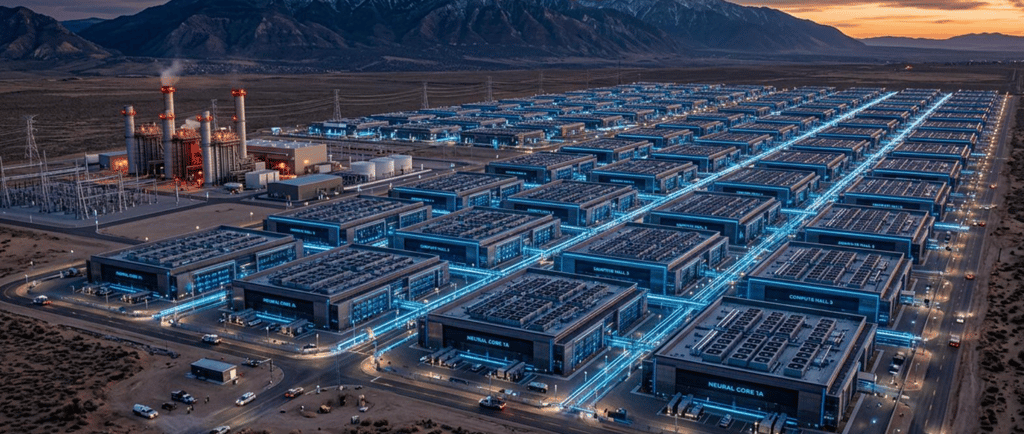
The Great Salt Lake, Data Centers, and the Future Utah Didn’t Ask For
The Great Salt Lake has always felt like a place caught between worlds.
It is beautiful and strange. Ancient and fragile. A place of birds, brine shrimp, salt, dust, industry, abandoned resorts, ghost stories, and one of Utah’s most haunting landscapes.
But now, the Great Salt Lake region is being pulled into a very different kind of story.
Not one about amusement parks.
Not one about old resorts.
Not even one about ghosts.
This one is about power.
Data.
Artificial intelligence.
Land.
Water.
And the question a lot of Utahns are starting to ask:
Who is this future actually for?
Recently, Utah has become part of a much bigger conversation about massive data centers — the kind of facilities needed to power cloud computing, artificial intelligence, military technology, and the digital world most of us use every single day.
On paper, these projects are often presented as progress. Jobs. Innovation. National security. Economic growth. A chance for Utah to be part of the next major technological boom.
But when you start looking closer, the story becomes a lot more complicated.
Because this is Utah.
This is the desert.
And this is happening near one of the most environmentally vulnerable places in the American West.
The Great Salt Lake is already under pressure. For years, people have watched its shorelines shrink, exposing more lakebed and raising concerns about toxic dust, arsenic, air quality, wildlife loss, and the future of the communities surrounding it.
So when people hear about huge data center projects moving into this region, they are not just asking, “How many jobs will it create?”
They are asking:
How much power will it need?
How much water will it use?
Where will that energy come from?
What happens to the heat?
What happens to the people who already live nearby?
And why does it feel like decisions are being made before the public has truly been heard?
That is where the fear really starts.
Data centers are not just big buildings full of computers. They are massive infrastructure projects. They need constant electricity. They need cooling. They need land. They need roads, transmission lines, backup systems, and long-term resource planning.
And in a state already worried about drought, growth, shrinking water supplies, and the future of the Great Salt Lake, that matters.
Supporters of these projects argue that Utah could benefit from becoming a hub for next-generation technology. They point to private investment, tax revenue, national security, and the growing demand for artificial intelligence infrastructure.
And to be fair, this is part of the modern world now. Every photo we store, every video we stream, every AI tool we use, every digital search, every cloud backup — all of it has to live somewhere.
But that is also what makes this conversation so uncomfortable.
Because the internet feels invisible.
The cloud sounds weightless.
Artificial intelligence feels like something that exists in code.
But it does not.
It exists on land.
It uses power.
It produces heat.
It requires water or cooling systems.
And sometimes, it shows up in the middle of communities that never asked to become the backbone of someone else’s digital empire.
That is what makes the Great Salt Lake data center debate feel so much bigger than one project.
It is not just about a data center.
It is about what kind of state Utah is becoming.
For decades, Utah has sold itself on open space, outdoor beauty, skiing, red rocks, family communities, clean living, and access to nature. But now, as the state grows, it is also being asked to carry the weight of explosive development: housing, traffic, warehouses, mining, energy expansion, water fights, and now massive tech infrastructure.
And the Great Salt Lake sits in the middle of all of it like a warning.
The lake is not just scenery.
It is habitat.
It is part of Utah’s air quality story.
It is part of the snowpack story.
It is part of the brine shrimp industry.
It is part of migratory bird survival.
It is part of the identity of northern Utah.
And if we keep treating the land around it like empty space, we may not understand what we lost until it is too late.
That is the part that feels almost eerie.
Because Utah has already been here before.
The Great Salt Lake has seen people come with big dreams before.
Saltair was supposed to be the Coney Island of the West — a grand resort rising from the salty shoreline. It was glamorous. Strange. Beautiful. A place where people came to dance, swim, ride, and escape.
And then came fires.
Flooding.
Decline.
Abandonment.
The lake moved.
The dream rotted.
The shoreline changed.
Now, more than a century later, the Great Salt Lake is being sold another dream.
This time, it is not roller coasters and dance halls.
It is servers.
AI.
National security.
Economic opportunity.
A digital future.
But the question is the same:
What happens when the dream is bigger than the land can hold?
That is why this story matters.
Because the Great Salt Lake is not just a backdrop for development. It is not empty desert. It is not wasted land. It is a living, shifting, fragile system that has already been pushed too far.
And the people who live here deserve more than glossy promises.
They deserve answers.
They deserve transparency.
They deserve to know what these projects will require, what they will cost, who benefits, and who carries the risk.
Because progress should not mean silence.
Innovation should not mean ignoring the people who have to live next to it.
And the future should not be built by draining, heating, paving, or gambling with one of the most important ecosystems in the West.
Maybe the Great Salt Lake has always been a mirror.
It reflects what Utah values.
It reflects what we ignore.
It reflects what we are willing to protect — and what we are willing to sacrifice.
And right now, that reflection is uncomfortable.
Because the lake is asking us a question:
Are we building the future carefully?
Or are we just repeating the same old story — chasing something shiny on the shoreline, while the warning signs are already rising from the dust?
Listen to the episode Secrets of the Great Salt on your favorite podcast platform, at Death Kissed Traveler Podcast.